
By Pooja Bajaj, CEO, ExtraMile
Navratri is more than a festival of music, dance, and vibrant colours. It is a celebration of community, tradition, togetherness, and positive energy. These are also the values that help build a stronger workplace culture.
Over the years, I have seen how meaningful celebrations can bring employees together in ways that everyday meetings and team activities sometimes cannot. A well-planned Navratri celebration in office gives employees an opportunity to connect with colleagues, experience different cultural traditions, and create memories beyond their regular work responsibilities.
For HR teams and business leaders, Navratri can be an excellent opportunity to introduce festive employee engagement through inclusive activities, creative challenges, and shared experiences.
If you are planning a Navratri celebration at your workplace, here are five creative ideas to make the occasion engaging, enjoyable, and meaningful for your employees.
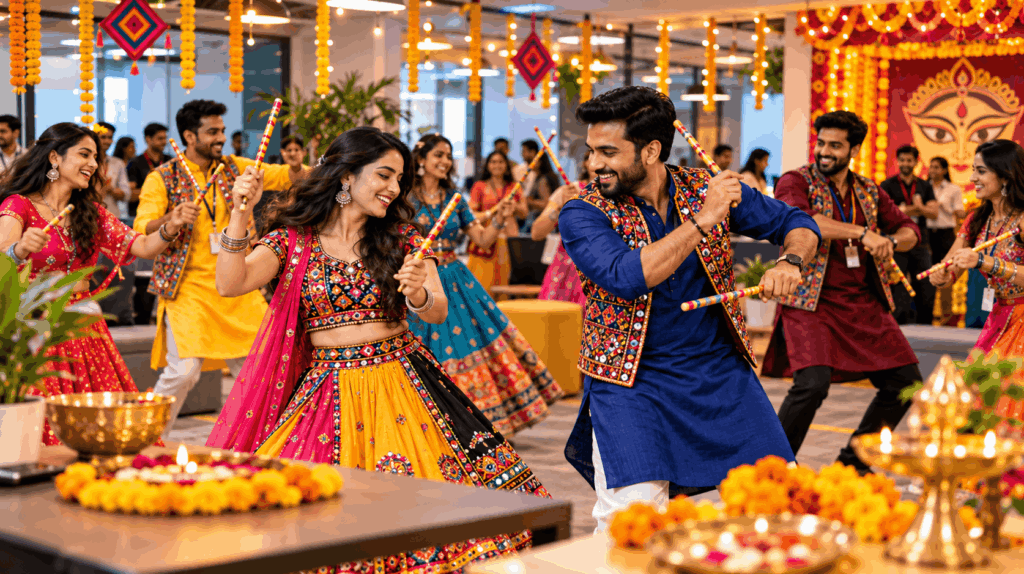
1. Organise an Office Garba Celebration
When we think of Navratri, Garba is often one of the first things that comes to mind. Bringing this traditional dance into the workplace can create an energetic and memorable employee experience.
You can organise a short Garba celebration in office during a break, as part of a town hall, or during a dedicated festive event. The goal does not have to be a professional dance performance. It should be about participation, enjoyment, and creating a comfortable environment where employees can join in.
Here are a few ideas to make the event more engaging:
- Organise a beginner-friendly Garba session led by an instructor.
- Invite employees to participate in group dance circles.
- Include a mix of traditional and contemporary music.
- Create a fun “Best Garba Energy” recognition category.
- Offer employees the option to participate as dancers, volunteers, or event coordinators.
For remote employees, you can also organise a virtual Garba session where team members learn a few simple steps together.
The most important part is to keep the activity optional and inclusive. Not everyone may be comfortable dancing, and employees should have other ways to participate.
2. Introduce Ethnic-Wear Days and Cultural Celebrations
Navratri is a wonderful time to celebrate India’s cultural diversity. An ethnic-wear day can be a simple yet effective way to add colour and excitement to the workday.
Instead of limiting the activity to a single dress code, encourage employees to showcase their individual styles and cultural backgrounds. Employees can wear traditional outfits from different regions of India, helping colleagues learn about the stories and traditions behind them.
Some Navratri celebration ideas for employees include:
- Organising a traditional attire day.
- Hosting a “Colours of Navratri” theme across nine days.
- Inviting employees to share the meaning behind their outfits.
- Creating a photo corner with festive decorations.
- Conducting a voluntary best-dressed or most creative look activity.
You can also introduce a “Culture Connect” segment where employees share a festival tradition, family custom, or regional celebration with their teams.
These activities help make workplace celebrations more personal. They encourage conversations between employees who may not otherwise interact and create opportunities to appreciate different cultural identities.
3. Plan Team-Based Navratri Challenges
Festivals become even more engaging when employees have an opportunity to participate in friendly team activities. Team-based challenges can encourage collaboration, creativity, and communication while keeping the festive spirit alive.
For example, you can divide employees into cross-functional teams and introduce a series of short Navratri-themed challenges. Each challenge can focus on a different skill or form of participation.
Here are a few activities you can consider:
- Navratri Trivia Challenge: Test employees’ knowledge of traditions, music, food, and regional celebrations.
- Festive Treasure Hunt: Create clues based on Navratri symbols, colours, and cultural references.
- Team Decoration Challenge: Ask teams to decorate a shared workspace or virtual background.
- Garba Playlist Challenge: Let teams create a festive playlist and explain their song choices.
- Nine-Day Engagement Challenge: Introduce one small team activity for each day of Navratri.
For hybrid teams, these challenges can combine physical and digital participation. Employees working from home can join quizzes, submit creative entries, or participate in virtual team competitions.
The objective should not be to create excessive competition. Instead, focus on shared participation, team bonding, and making space for employees to interact outside their usual work groups.
4. Celebrate Through Traditional Food and Decoration Contests
Food and decorations are an important part of festive celebrations. Bringing these elements into the workplace can create opportunities for informal conversations and shared experiences.
You could organise a traditional food-sharing activity where employees bring or introduce a Navratri-inspired dish. If food is being served at the office, make sure dietary preferences, allergies, and religious practices are considered.
Some activities include:
- A traditional food showcase featuring different regions.
- A healthy festive snack counter.
- A team-based office decoration contest.
- A sustainable decoration challenge.
- A “Guess the Festive Dish” quiz.
- A virtual recipe-sharing session for remote employees.
Decoration contests can be particularly engaging when teams are given a theme, such as sustainability, Indian heritage, or the nine colours of Navratri. Encourage the use of reusable or eco-friendly materials wherever possible.
These activities can also support collaboration between departments. Employees from different teams can work together on a shared decoration or food experience, strengthening relationships in a relaxed setting.
5. Create Inclusive Virtual and Hybrid Navratri Activities
Today, many organisations have employees working across offices, cities, and remote locations. A successful Navratri celebration in office should also consider employees who cannot attend an in-person event.
Hybrid and virtual activities ensure that festive engagement is not limited by location. Even a short online experience can help remote employees feel included in the celebration.
Some Navratri activities for office that can be adapted for virtual participation include:
- Online Navratri quizzes and cultural trivia.
- Virtual ethnic-wear showcases.
- Remote team decoration contests.
- Festive bingo with Navratri-themed prompts.
- Online Garba tutorials.
- Digital storytelling sessions about regional traditions.
- Festive photo and video challenges.
Inclusion also means recognising that employees may have different cultural backgrounds, beliefs, physical abilities, and comfort levels. Participation should always be voluntary, and activities should not make anyone feel pressured to dance, dress in a particular way, or share personal beliefs.
The focus should be on celebrating together while respecting individual choices.
Making Navratri a Meaningful Employee Engagement Experience
Festive celebrations can create a positive workplace environment, but their impact depends on how thoughtfully they are planned. A successful celebration is not necessarily the one with the biggest budget or the most elaborate decorations. It is the one where employees feel welcomed, respected, and encouraged to participate.
As HR and business leaders, we should look beyond one-day celebrations and use festivals as opportunities to strengthen workplace relationships throughout the year. Navratri can become a starting point for conversations around culture, inclusion, teamwork, and employee well-being.
At ExtraMile, we believe employee engagement works best when experiences are designed around people—not just events. Whether your teams work from the office, remotely, or through a hybrid model, festive activities can be customised to suit your culture, workforce, and engagement goals.
This Navratri, let us create experiences that go beyond music and decorations. Let us build moments of connection, appreciation, and togetherness that employees can carry with them long after the celebrations end.
Because when employees feel included in the celebration, they feel more connected to the workplace too.